timelets: (Default)
In all discussions of nature we must remember the differences of scale, and in particular the differences of time-span. We are apt to take modes of observable functioning of the human body as setting an absolute scale. It is extremely rash to extend conclusions derived from observation far beyond the scale of magnitude to which observation was confined. For example, to exhibit apparent absence of change within a second of time tells nothing as to the change within a thousand years. Also no apparent change within a thousand years tells anything as to a million years; and no apparent change within a million years tells anything about a million million years. We can extend this progression indefinitely. There is no absolute standard of magnitude. Any term in this progression is large compared to its predecessor and is small compared to its successor.
...
The danger of all these fundamental notions is that we are apt to assume them unconsciously. When we ask ourselves any question we will usually find that we are assuming certain types of entities involved, that we are assuming certain modes of togetherness of these entities, and that we are even assuming certain widely spread generalities of pattern. Our attention is concerned with details of pattern, and measurement, and proportionate magnitude. Thus the laws of nature are merely all-pervading patterns of behaviour, of which the shift and discontinuance lie beyond our ken.
...
Nature is full-blooded. Real facts are happening. Physical Nature, as studied in Science, is to be looked upon as a complex of the more stable interrelations between the real facts of the real universe.


-- Whitehead. https://brocku.ca/MeadProject/Whitehead/Whitehead_1938/1938_07.html

=========
pattern, measurement, proportional magnitude.
timelets: (Default)
“...he [Lincoln] managed polarities: they didn’t manage him.
...
Scale sets the ranges within which experience accrues. If, in evolution, edges of chaos reward adaptation; if, in history, adaptation fortifies resilience; and if, in individuals, resilience accommodates unknowns more readily than rigidity, then it stands to reason that a gradual expansion of edges better equips leaders for the unexpected than those that shock, leaving little time to adapt, or those inherited, which breed entitlement and arrogance, its companion.
..
Space is where expectations and circumstances intersect."
...
Tolstoy suggests, in the last pages of War and Peace, that the interdependence of time, space, and scale simultaneously reflects choice and necessity: the illusion of agency causes us to believe in free will even as inexorable laws deny the possibility. ”

---John Lewis Gaddis. “On Grand Strategy.”


We can model this as an interval and/or 10x pushout/pullback.

Creating a new scale, i.e. expanding the range, e.g. via a technology can be viewed as an equalizer.
timelets: (Default)
The evidence suggests that this early group of humans lived at the site for a relatively brief period, of perhaps about 2,000 years after which the site was unoccupied.

https://www.bbc.com/news/science-environment-60305218


Reading archeology news helps one develop a broader perspective on human time.

TIL

Dec. 12th, 2020 11:02 am
timelets: (Default)
“Literacy changes people’s biology and psychology without altering the underlying genetic code. A society in which 95 percent of adults are highly literate would have, on average, thicker corpus callosa and worse facial recognition than a society in which only 5 percent of people are highly literate.
...
Literacy thus provides an example of how culture can change people biologically independent of any genetic differences.
...
highly literate societies are relatively new, and quite distinct from most societies that have ever existed. This means that modern populations are neurologically and psychologically different from those found in societies throughout history and back into our evolutionary past.”

--- Joseph Henrich. “The WEIRDest People in the World.”
timelets: (Default)


--- Peter Turchin, Historical Dynamics, 2019. p 44.

This could be key to understanding the density divide.

TIL

May. 26th, 2020 06:09 pm
timelets: (Default)
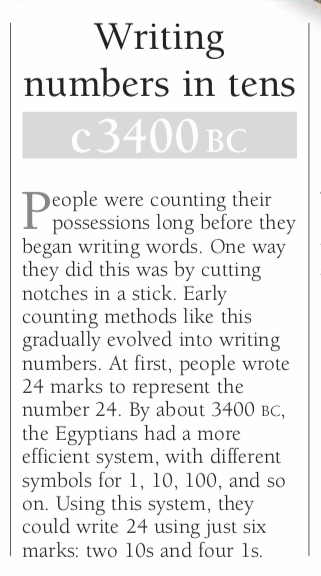
It's really hard to think about counting as a scalable physical activity, e.g. in terms of marginal cost of adding 10 vs adding 1.

FUBAR

Mar. 2nd, 2020 12:43 am
timelets: (Default)
It's quite possible that the low number of US cases is due to the faulty test kit provided by CDC:
The World Health Organization (WHO) has shipped testing kits to 57 countries. China had five commercial tests on the market 1 month ago and can now do up to 1.6 million tests a week; South Korea has tested 65,000 people so far. The U. S. Centers for Disease Control and Prevention (CDC), in contrast, has done only 459 tests since the epidemic began. The rollout of a CDC-designed test kit to state and local labs has become a fiasco because it contained a faulty reagent. Labs around the country eager to test more suspected cases—and test them faster—have been unable to do so. No commercial or state labs have the approval to use their own tests.

https://www.sciencemag.org/news/2020/02/united-states-badly-bungled-coronavirus-testing-things-may-soon-improve
timelets: (Default)
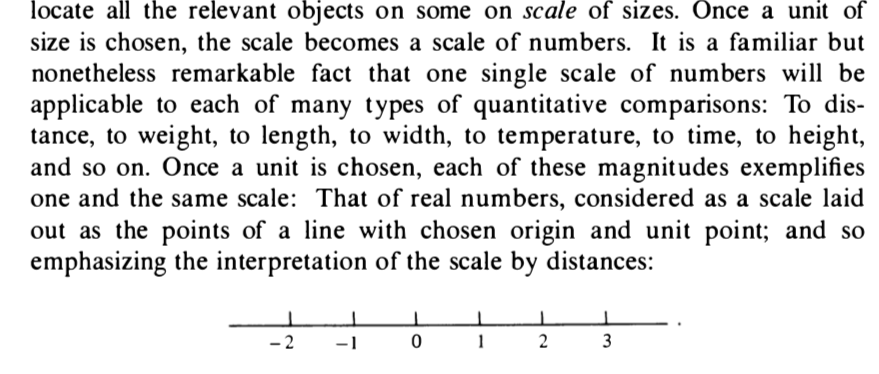
A good introduction to the concept of scale


S. Mac Lane, Mathematics: Form and Function, 1985. p. 94.
timelets: (Default)
Parts of the country are dying out. Services they receive are the worst of both worlds: expensive and low quality:

In the medical desert that has become rural America, nothing is more basic or more essential than access to doctors, but they are increasingly difficult to find. The federal government now designates nearly 80 percent of rural America as “medically underserved.”
...

What Van Horn offered was a three-year contract with $300,000 guaranteed for the first year, which was about 50 percent more than Cummings could have earned in a big city. He wanted to practice in a small town where he could get to know his patients. His wife liked the nearby mountains. They would be close enough to drive back to Central Texas to visit family. The federal government would forgive much of his student debt as a reward for his working in a medically underserved area. Van Horn had sealed the deal with a $5,000 signing bonus and a $3,000 monthly stipend during the final year of his residency.
...
Even during his residency in tiny Winnemucca, population 7,400, he had worked with a medical team of emergency physicians, hospitalists and general surgeons. Once he started in Van Horn, he would eventually become the only doctor on call.

https://www.news-journal.com/news/in-the-medical-desert-of-rural-america-one-doctor-for/article_cff7ecda-e2f2-11e9-a269-330f202342cd.html


Transportation costs are high, specialization doesn't make business sense, investment into services infrastructure has no chance of paying off. Model-wise, the problem is the same as phone-based customer support.
timelets: (Default)
Because pure line (genotypically identical) plant varieties often only have one or a few major genes for disease resistance, and plant diseases such as rust are continuously producing new races that can overcome a pure line's resistance, multiline varieties were developed. Multiline varieties are mixtures of several phenotypically similar pure lines which each have different genes for disease resistance. By having similar heights, flowering and maturity dates, seed colors, and agronomic characteristics, they remain compatible with each other, and do not reduce yields when grown together on the field.
...
Between five and ten of these lines may then be mixed depending upon the races of pathogen present in the region. As this process is repeated, some lines will become susceptible to the pathogen. These lines can easily be replaced with new resistant lines. As new sources of resistance become available, new lines are developed. In this way, the loss of crops is kept to a minimum, because only one or a few lines become susceptible to a pathogen within a given season, and all other crops are unaffected by the disease. Because the disease would spread more slowly than if the entire population were susceptible, this also reduces the damage to susceptible lines.

https://en.wikipedia.org/wiki/Norman_Borlaug


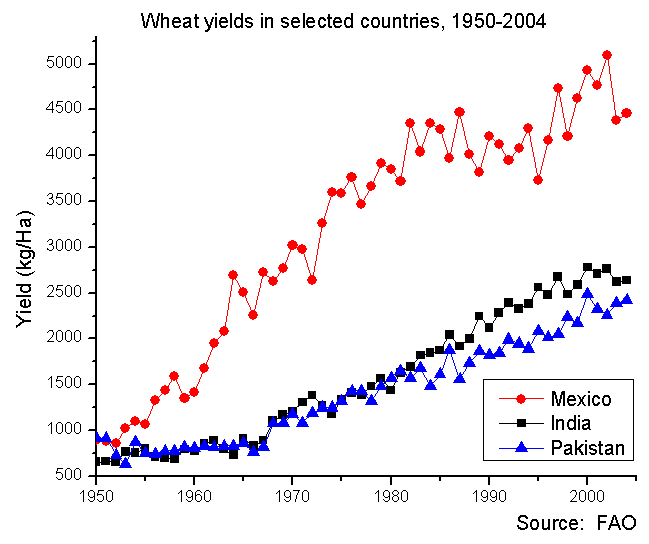
This is an interesting dilemma: On the one hand, you want to have pure lines because they enable scalable agricultural techniques. On the other hand, you don't want to have pure lines because they are susceptible to the same disease. In short, sameness/uniformity enables scalability, both for humans and pathogens. We can also point out directly opposing desires for : D1 - pure line; D2 - multiline.

Dwarfing was another conceptual breakthrough:
Taller wheat grasses better compete for sunlight, but tend to collapse under the weight of the extra grain—a trait called lodging—from the rapid growth spurts induced by nitrogen fertilizer.
To prevent this, he bred wheat to favor shorter, stronger stalks that could better support larger seed heads.
timelets: (Default)
(via Vlad) An instructive interview that shows how people make mental mistakes by extrapolating technology solutions with "more-of-the-same" thinking:
http://archive.is/6M8mg#selection-1375.7-1381.541

We spend our time looking for threats against a company. We look for things that might be active inside the company that would cause us concern, and then of course we look to respond—detecting, containing, and deflecting those threats as much as possible while at the same time keeping in mind that our executives and board of directors always want to know what's going on with security in the company.

Generically, every breach has the big data problem. For example, in a malware incident that results in a breach, the malware comes in and spreads across the environment.

When that scope [of investigation] expands, the security team typically has to deal with a sudden increase in big data -- logs, alerts, etc. -- making budget planning critical. Right now I'm planning my budget for next year, and I hope I ask for enough disk space and computing power so that the infrastructure is prepared for future attacks. ... Burst capacity is really critical for the security team who needs to find answers quickly.


Basically, she assumes that data security and hardware capacity/budget are "entangled" linear orders.

also see https://timelets.dreamwidth.org/682944.html

upd: the alleged exploit https://qz.com/1073221/the-hackers-who-broke-into-equifax-exploited-a-nine-year-old-security-flaw/
timelets: (Default)
Before I forget: there's a moment in life of a category when functions have to become functors, and vice versa. We can think about it as if an object is being "expelled" from its mother category and has to become its own category. Alternatively, a category can be "sucked" into another category and become an object. (the video below describes how hermits became monks in a monastery).

Probably this is not new, but it's useful to think about such transitions.


timelets: (Default)
The [Roman] empire is a constant presence in our evidence from this period, and it enters mathematical discourse in several ways. Managing an army, collecting taxes, keeping a census on such a vast scale implied centralized administrative practices (accounts, tax rolls, land surveys). Mathematics was also used to articulate views about politics, society and morals. It would be impossible to describe our period in a few words: let us just say that the world had become even larger than after Alexander’s expedition, exchanges of all types increased; and the textual past kept accumulating in the form of books and libraries.

S.Cuomo. Ancient Mathematics.


As the scale increases, what can't be mapped can't be governed or reflected upon.

timelets: (Default)
Although estimates vary, military history experts generally agree that the average GI who served in Europe from D day to the end of the war had sex with about twenty-five women. By the time Germany surrendered, the US occupying army had to ration condoms to four per soldier per month, something an army official complained was “entirely inadequate.”
When the American military occupied Italy, it was estimated that 75 percent of all soldiers had sex regularly with Italian women.

Screen Shot 2016-11-27 at 6.18.33 PM
-- Aine Collier, The Humble Little Condom: a History.
timelets: (Default)
The merchants of Amsterdam at the end of the ixteenth century-a hundred years after the great flow f silver had started-were the recipients of a notably diverse collection of coins, extensively debased as to gold or silver content in various innovative ways. A manual for money changers issued by the Dutch parliatnent in 1606 listed 341 silver and 505 gold coinS.
Within the Dutch Republic no fewer than fourteen rUnts were then busy turning out money;

For each merchant to weigh the coin.. he received was a bother; the scales were also deeply and justifiably suspect.dam Smith told. 170 years later. of the solution: "In order to remedy [the aforemenhoned] inconveniences, a bank was established in 1609 l1I1~er_ the guarantee of the City. This bank received oth foreign coin, and the light worn [and other de>ased] coin of the country at its real intrinsic value in the good standard money of the country, deducting lly so much as was necessary for defraying the eJl!" lease of coinage, and the other necessary expense 01 lanagement. For the value which remained, after thi! imall deduction was made, it gave a credit on its books."12 Thus appeared, to regulate and limit abuse of he currency, the first notable public bank.
p. 19-20
timelets: (Default)
Human nature lay be an infinitely variant thing. But it has constants. )ne is that, given a choice, people keep what is the ,est for themselves, i.e., for those whom they love be most.

With numerous coins in circulation variously aduIera ted, clipped, filed, sweated, trimmed, and with he worst being offered first, coins became a probm. The path was now open for the next great rcorm, which was to go back to weighing. This decilve step was taken by the City of Amsterdam in 1609 -a step that joins the history of money to the history if banking. It was a step especially occasioned by the arge trade of Amsterdam. That, in turn, was assoated with one of the most pervasively influential :vents in the history of money-the voyages of Columbus and the effect on Europe of the ensuing conluest and development of Spanish America.

Discovery and conquest set in motion a vast low of preciou~ metal from America to Europe, and the re~ult was a huge rise in prices-an inflation occasioned by an increase in the supply of the hardest of hard money.
p. 13

Profile

timelets: (Default)
timelets

December 2025

S M T W T F S
  12 3456
78910111213
14 151617 18 19 20
21 222324252627
28293031   

Syndicate

RSS Atom

Most Popular Tags

Style Credit

Expand Cut Tags

No cut tags
Page generated Dec. 24th, 2025 08:55 am
Powered by Dreamwidth Studios