(no subject)
Jan. 17th, 2026 10:59 amOn Bloomberg Daren Acemoglu talks about our transition to an authoritarian kleptocracy.
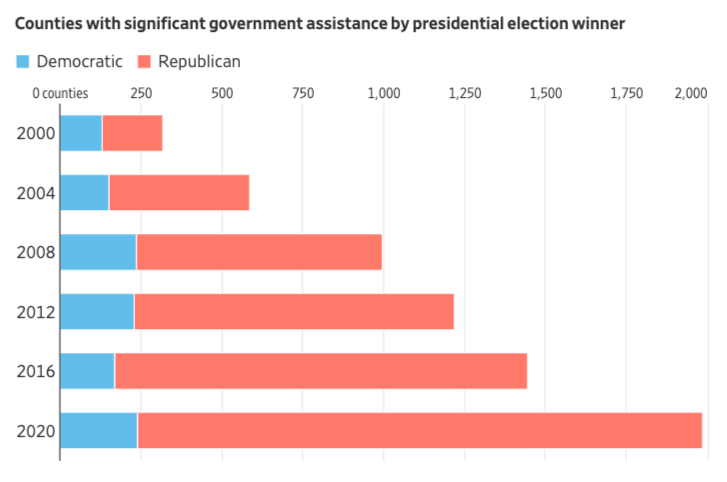
Three decades ago, the entire middle 40% held a greater share of wealth than the top 1%. Today the reverse is true, with Moody’s Analytics recently estimating that the top 10% of US households now make up about half of all spending.
https://www.bloomberg.com/opinion/articles/2026-01-14/america-s-a-la-carte-economy-is-making-everyone-feel-poorer
Though Trump has been in office for more than three weeks, he has yet to send a substantive bill to Congress. Some observers have compared Trump’s flurry of action to Franklin Roosevelt’s first 100 days, or Lyndon Johnson’s Great Society agenda. They are missing the point. FDR and LBJ sent big legislation to Congress. Trump is starting with a pipeline of executive orders. If the courts stymie those, they will be blocking his agenda. His strategy rests on a pliant judiciary.
He believes the US electorate gave him an unchecked mandate. It follows that any interference in his exercise of power — including an Alice-style belief that the US constitution means what he chooses it to mean — amounts to a block on democracy. Could he put 30,000 illegal immigrants beyond legal reach in a refitted Guantánamo Bay? Of course. The American people have spoken. Might he pick which of America’s creditors to repay and which to declare fraudulent? Quite possibly. Trump, not judges, will be the decider.
The Republican-controlled Congress has removed itself from Trump’s path. Unelected judges are the problem. Ultimate among those are the nine justices of the US Supreme Court. It is to their inboxes such dilemmas are heading. At stake is their reason for existing.
Turkeys are allegedly opposed to Thanksgiving. Yet the Supreme Court last July granted the US president sweeping immunity from almost any “official” acts. It takes little imagination to infer that this could be stretched to ignoring the courts. The six justices who put their names to that ruling may now regret their loose phrasing. They could have edited themselves into an advisory body. The problem the court faces is that Trump has a strong wind at his back. Constitutional lawyers warn that he could destroy America’s separation of powers.
https://www.ft.com/content/8e52b5ae-56b4-4571-ba09-103d5799ce9a
Perhaps the biggest test for Congress is Trump’s bid to wrestle power over one of the legislature’s core functions: deciding what programs get funded, and at what cost. In an unprecedented action, the Trump administration offered 2 million federal employees a chance to resign now and receive eight months of pay, implying an expenditure of money not authorized by Congress. Further, Trump and his allies have said they would contest a Nixon-era law that requires him to spend money on programs as appropriated by Congress. Trump allies have said the law is unconstitutional and that the president can impound, or refuse to spend, money for programs he doesn’t like.
The tepid response so far offers the latest measure of how much Congress has ceded its authority since earlier eras in which powerful committee chairmen defended their constitutional turf no matter who was in the White House. Today, Trump dominates his party, and many GOP lawmakers fear that challenging him could cost them their jobs, as the president and his allies could back primary challenges against them.
https://www.wsj.com/politics/policy/trump-kicks-aside-congress-with-sweeping-claims-of-presidential-power-a3daf68b
“In 1812, the first edition of their anthology, comprising eighty-six stories, came out in an edition of 600, with an apparatus of notes running to hundreds of pages. It was not really intended to be read for pleasure at all by the children and households of its title; it was a learned work setting out to reconfigure the cultural history of Germany along lines that would emancipate it from the monopoly of classical and French superiority. Yet this collection—by the final, standard edition of 1857 the number of tales had grown to 210—was to become the most widely translated work in the world after the Bible and the Qur’an, rendered into more than 160 languages so far, including Xhosa and Tagalog, and still counting.”
...
"Germany wasn’t yet Germany. It was a congeries made up of dozens of principalities and archdukedoms, free Hanseatic ports and archbishoprics. History shows us that the modern nation-state develops long after a national culture and its language: think of Italy and of Dante, writing five hundred years before Italian unification. For centuries, “most of the peninsula had been under German or Austrian or Spanish rule, while the Renaissance, indisputably Italian, was influencing the whole world. The Grimms were living in a time of turmoil and bloodshed. ”
...
“One response to humiliation is to assert cultural riches and distinctiveness, even pre-eminence. ”
--- Warner, Marina;. “Once upon a Time."


As soon as it rolls out the software update this fall, Apple will instantly make the AirPods Pro 2 into a medical device, essentially turning every pair of the company’s top-selling headphones into over-the-counter hearing aids.
...
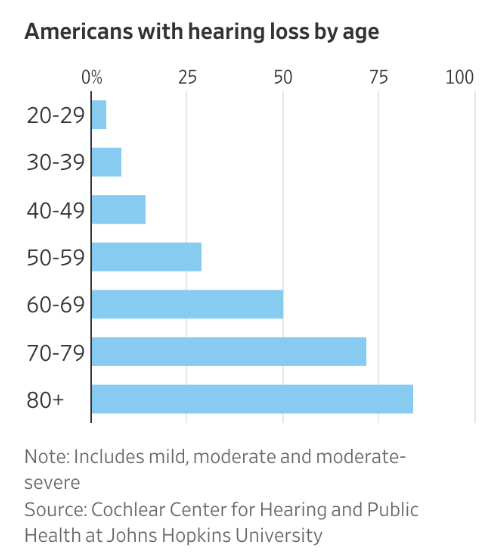
75% of people with hearing loss let it go untreated, according to the Apple Hearing Study, a project run with the University of Michigan. In case you don’t trust medical statistics from a trillion-dollar company trying to sell you something, the audiologists I consulted told me that number sounded right.
Рынок венчурных инвестиций в РФ в 2023 году продолжил сжиматься, его объем составил $118,2 млн — это падение более чем в десять раз в сравнении с 2022 годом ($1,252 млрд), до исторического минимума за семь лет.
https://www.kommersant.ru/doc/6552547