timelets: (Default)
The real alignment problem:

The federal government will stop working with Anthropic and designate the artificial intelligence company a supply-chain risk, a dramatic escalation of the government’s clash with the company over how its technology can be used by the Pentagon.

The company’s red lines had been domestic mass surveillance and autonomous weapons, areas the Pentagon said Anthropic didn’t need to worry about because the military would never break the law with AI. Defense Department officials said Anthropic needed to fully trust the Pentagon to use the technology responsibly and relinquish control.

“We cannot in good conscience accede to their request,” Anthropic Chief Executive Dario Amodei said on Thursday.

https://www.wsj.com/tech/ai/trump-will-end-government-use-of-anthropics-ai-models-ff3550d9

Trump and his administration are threatening to either kill or confiscate the best US AI model because Amodei adheres to some basic human norms.


Compared to that the war with Iran is small potatoes.
timelets: (Default)
We asked Amodei and four other leaders in AI how they think about their own children’s futures and what advice they give them.
...
--There are two areas that I think will be vibrant in the short to medium term. One is energy. The other is healthcare.

-- In terms of what he should study in college... I’d rather it be something in the space of mathematics because logical thinking is something that will be required in any future role because of how AI works.

-- My kids are interested in broad careers like law and medicine, so I’m less worried. I think generalist jobs, where there are many different skills bundled together, are good jobs in an AI world. .. A liberal-arts education matters more than ever.

-- Metacognitive skills will be very important—flexibility, adaptability, experimentation, thinking critically, being able to challenge things. Developing critical-thinking skills requires friction, doing things that are hard, doing deep thinking.

For that, a traditional liberal-arts education is really important.

-- So, if anything—and this sounds funny to say about future teenagers—I might orient my kids toward more socializing and understanding how they relate to people in their own unique way.


https://www.wsj.com/lifestyle/careers/what-ai-executives-tell-their-own-kids-about-the-jobs-of-the-future-1ba43f65
timelets: (Default)
AI [mis-]alignment amplifies human alignment problem:
Right now, workers are potentially training AI how to make them obsolete. And they often don’t realize it.

The kind of AI used by companies, called an enterprise AI system, can capture everything you do at work and use that information to train itself. These systems can record your interactions within the platform—the prompts you write, the documents you create, the queries you run.

In other words, the company can potentially track—and claim ownership of—every keystroke you make within the system, every idea you document there, every tool you build using that platform.


This dynamic may fundamentally change the relationship between employer and employee. The stakes are so high and so urgent that both sides are rushing to position (or protect) themselves. Executives are rapidly implementing enterprise AI systems, seeking productivity gains and competitive advantage—and they often aren’t disclosing the implications for job security and privacy. Meanwhile, at least some employees are secretly adopting personal AI tools, sometimes violating corporate policies, so that their employers can’t capture everything they know and do.

Individual opt-out of AI is often impossible, so unions and professional associations need to pay attention. With collective bargaining, workers could demand transparency about the use of enterprise AI and demand fair compensation for the knowledge it gathers. Without collective power, individual employees will keep clicking “accept” on agreements that restructure their jobs simply because they have no alternative.

https://www.wsj.com/lifestyle/careers/ai-knowledge-capture-employees-a69a0e1c

timelets: (Default)
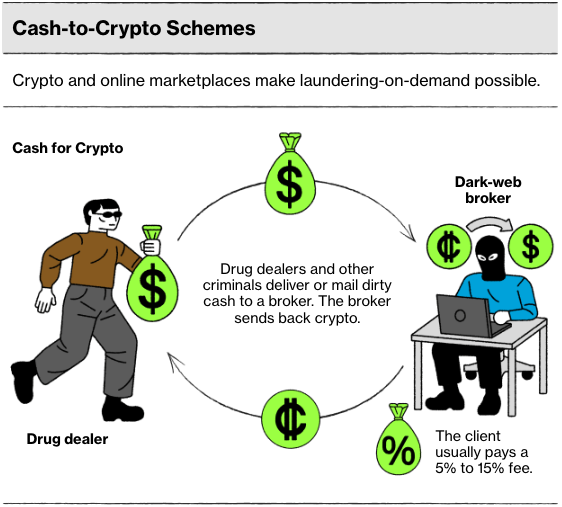
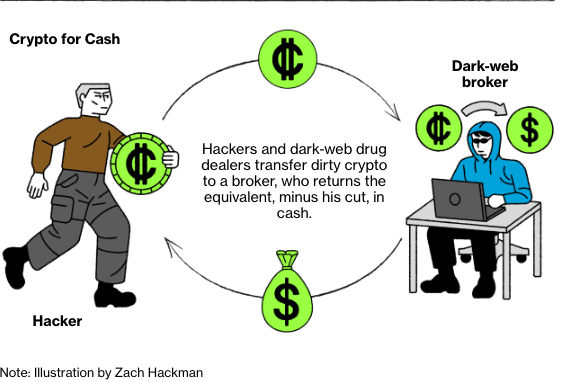
Powered by encrypted messaging apps, anonymized platforms and a growing pool of people willing to move money for a cut, the system is agile, scalable and disturbingly hard to shut down. What began a decade ago as a fringe trend on dark-web bazaars is fast evolving into a sprawling global ecosystem of freelance money movers. Even the biggest criminal groups, long reliant on in-house laundering, are starting to tap it.

This is happening while the Trump administration is shifting funding and priorities away from money laundering investigations while also clearing the way for crypto to take a larger role in global finance. That raises the dangerous possibility that laundering operations could slip entirely beyond the government’s ability to police them, several watchdogs and crypto enforcement agents say.


https://www.bloomberg.com/news/features/2026-02-11/drug-cartel-money-laundering-shifts-to-crypto-and-the-gig-economy


Speaking of the Trump administration,

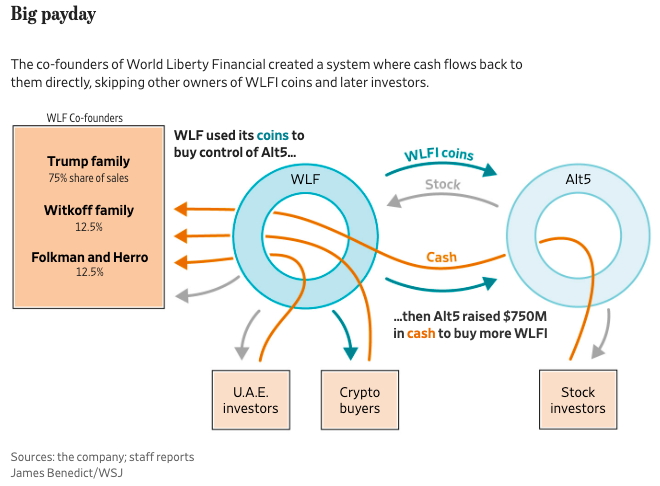
Both the Trumps and Witkoffs began cashing out during the run-up to the inauguration.

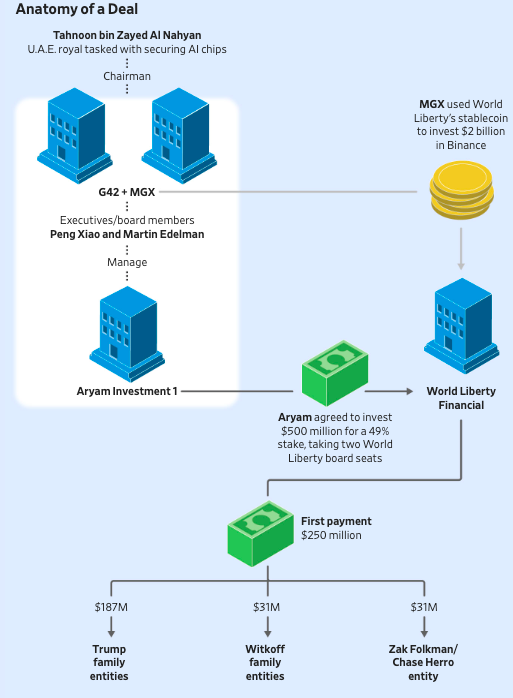
On Jan. 16, two lieutenants for Sheikh Tahnoon bin Zayed Al Nahyan, the U.A.E. president’s brother, signed the deal to purchase a 49% stake in World Liberty for half a billion dollars—a huge sum for a company that at that time had no products. Of the upfront installment, $187 million was directed to Trump family entities, while $31 million was slated to flow to entities affiliated with the Witkoff family. The deal didn’t give the Tahnoon-backed entity any rights to the proceeds of future WLFI token sales, preserving the Trumps’ and Witkoffs’ income stream.

World Liberty stopped selling its WLFI token to the public in March. By then, the company said it had taken in $550 million from the token sales, in addition to the U.A.E. investment money.


https://www.wsj.com/finance/currencies/trump-sons-crypto-billions-1e7f1414
timelets: (Default)
One key difference between web and AI — the two most recent tech revolutions — would be the impact of money. That is, the web was built with the idea that information wants to be free and everyone should have as much access to content as possible. By contrast, AI has access inequality built in. Compute and expertise cost money and people, esp. businesses, would get dramatically different outcomes from AI using free and paid services. Similar to social networking, the "free" aspect is a one-way street now: the public provides their data for free and hopes to get something valuable in return.
timelets: (Default)


https://www.wisconsinhistory.org/Records/Image/IM72294

I work with many startups and see a lot of pitches. I’m yet to see a viable business scenario where AI/ML leads to job growth, esp. short-term, except maybe data center buildup.
timelets: (Default)

Two months after the March meeting, the administration committed to give the tiny Gulf monarchy access to around 500,000 of the most advanced AI chips a year—enough to build one of the world’s biggest AI data center clusters. The framework agreement called for roughly one-fifth of the chips to go to G42, The Wall Street Journal previously reported.

The agreement was widely viewed as a coup for the emirate’s ruling family, overcoming longstanding U.S. national security concerns and allowing the country to compete with the most powerful economies in the world at the cutting edge of AI advances. Proponents hailed the deal for unlocking a flood of investment into the U.S. and for helping entrench American technology as the global standard.

What wasn’t publicly known: Tahnoon’s emissaries had signed the deal to purchase 49% of World Liberty that January.

At the time of the investment, World Liberty had no products. It had raised $82 million by selling a token called WLFI. Aryam’s investment, though, didn’t give it the rights to future WLFI token sales, leaving the Tahnoon-backed entity out of what was then the company’s only source of revenue, the documents said.

https://www.wsj.com/politics/policy/spy-sheikh-secret-stake-trump-crypto-tahnoon-ea4d97e8

timelets: (Default)


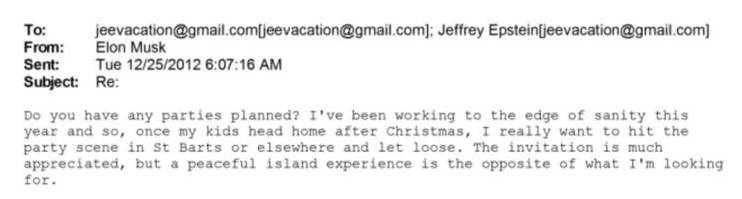
Moral or, more precisely, immoral issues aside, Epstein ran a successful service business where he provided his customers, aka "friends", with exactly what they wanted when they wanted it. He also assumed legal risks, which the customers appreciated. That aspect of the business ultimately led to his incarceration and death.

Madame Hollywood was convicted in the 1990s, so Epstein learned from her mistakes and located his high-end sex services center on an island, not in a large city like LA where the word would eventually get out.

I wonder who provides the services now and how they deal with risks.
timelets: (Default)
When we talk about AI as a technology platform, the current discussion about alignment looks particularly deficient because it fails to address the enshittification problem.
timelets: (Default)

Yale University is going tuition-free for undergraduates from families with incomes of less than $200,000, following recent moves by peers including Harvard University to broaden access.

Enhanced financial aid will ensure that students from such families will “receive need-based scholarships that meet or exceed the cost of tuition,” Yale said in a statement Tuesday. The changes, which take effect in the 2026-2027 academic year, will also eliminate all expected costs for families with typical assets and incomes below $100,000.

https://www.bloomberg.com/news/articles/2026-01-27/yale-to-offer-free-tuition-to-families-making-less-than-200-000


Median income in the US is less than $100K, which means a young talented American person can get free education from the Ivies, where typical full tuition is $100/year. Essentially, rich foreigners are paying for Americans and when Trump prevents them from entering the US he forces tuition fees on the middle class.
timelets: (Default)
In the early 2000s, Huawei survived Cisco's IP lawsuit because it partnered with 3Com, whose CEO Bruce Chaflin hated John Chambers, the CEO of Cisco.
“An alliance between 3Com and Huawei was attractive to both sides. Huawei would get the immediate legal protection of 3Com’s deep patent portfolio; 3Com would get Huawei’s lower production costs and its connections to the vast China market. Soon after the two announced their joint venture, called H3C, 3Com’s lawyers filed a motion to intervene in the Cisco case, calling 3Com an interested party.”

--- Eva Dou. “House of Huawei.”


Ultimately, both the 3Com alliance with Huawei and Cisco itself failed, while Huawei survived and prospered by copying technologies from the West and selling them to the rest of the world. But in the beginning, the Cisco lawsuit looked quite scary because it threatened Huawei's very existence.

“Ren told his trusted deputy, Guo Ping, who was now Huawei’s executive vice president, to get to the US as quickly as he could. Ren invoked the fable of ancient Chinese military general Han Xin*, who had accepted the humiliation of crawling between another man’s legs to prevent a deadly fight.”

* The fable of General Han Xin’s humiliation, known as "crawling between the legs" (胯下之辱), tells of a young, poor Han Xin being challenged by a bully in his hometown of Huaiyin to either kill him or crawl through his legs. Choosing to endure this shame rather than waste his life on a petty killing, Han Xin crawled through, later becoming a renowned military strategist and rewarding the man for testing his resolve.
timelets: (Default)
“Ren saw a Russia devastated by hyperinflation... Ren felt that the United States was partly to blame: Washington had coaxed the leader of the new Russia, Boris Yeltsin, to apply “shock therapy” to the economy with a rapid shift to capitalism, he wrote, but Washington did not follow through with the financial aid it had dangled. “They always give you some bait to get you to change some policies, but when you’ve made changes according to their demands, they raise further demands,” Ren wrote. “You still cannot get ‘sincere’ help from the United States.”

At the end of the day, the Russians remained wary about installing Chinese switches in their networks. “We are still unsure how much we know about Russia and if we can really open up the market,” Ren wrote to staff.

Read more... )

-- Eva Dou. “House of Huawei.”
timelets: (Default)
Federal Reserve Chair Jerome Powell plans to attend Wednesday’s Supreme Court hearing over the attempted dismissal of Fed Governor Lisa Cook by President Donald Trump, according to a person familiar with the situation.

Fed watchers and legal analysts say the outcome of the case will have a profound impact on the president’s ability to fire Fed governors and, by extension, on the central bank’s ability to set interest rates free of political interference.

https://www.bloomberg.com/news/articles/2026-01-19/fed-s-powell-plans-to-attend-cook-s-supreme-court-hearing

Powell wants to look the Supreme Court judges in the eyes and see if they have any courage left to practice law at all. Too bad tv cameras are not allowed during the hearings. It's going to be a moment reminiscent of the Godfather II Committee proceedings episode.


timelets: (Default)
“On January 28, 1996, Ren Zhengfei held Huawei’s first “mass-resignation ceremony.” Each head of a regional sales office was told to prepare two reports: a work summary and a written resignation. “I will only sign one of the reports,” Ren said.

Huawei had started out in rural markets, and many of its early sales managers were provincial in their experience and network of contacts. As Ren sought to go national and international, he decided to make the entire sales staff resign and reapply for their jobs. “The mountain goat must outrun the lion to not be eaten,” he had told them ahead of the event. “All departments and sections must optimize and eat the lazy goats, the goats that do not learn or progress, and the goats with no sense of responsibility.”

They were following the strategy that Mao had used to win the Chinese Civil War of “encircling the cities with the countryside.”[9] They’d won over villages and towns in the beginning, building their strength to take on the big cities.

Ren told his followers that demotions built character and that the demoted would only be stronger when they worked their way up again.... “Even Deng Xiaoping could go down and up three times. Why can’t you go down and up three times?”

-- Eva Dou. “House of Huawei.”
timelets: (Default)
One needs to be an idiot to believe that Trump's run at Greenland is driven by national security, rather than the good old greed for their natural resources.

Here's a guide on how businesses (of course only those who have direct access to him) can buy influence with Trump. https://www.bloomberg.com/features/2026-ceo-playbook-trump-second-term

Corporate America is entering the second year of Donald Trump’s second term with a new, hard-won understanding: The president’s personal interventions can shape business as profoundly as any economic force.

5. Perhaps above all, the author of The Art of the Deal sees every interaction as a transaction. Urban, of BGR, cites a Beltway adage: “The first rule of horse trading is to have a horse.”

In Trump’s Washington, those transactions often hinge on what a company can offer—or surrender—to stay in the administration’s good graces.

This is textbook government corruption.
timelets: (Default)
Three decades ago, the entire middle 40% held a greater share of wealth than the top 1%. Today the reverse is true, with Moody’s Analytics recently estimating that the top 10% of US households now make up about half of all spending.

https://www.bloomberg.com/opinion/articles/2026-01-14/america-s-a-la-carte-economy-is-making-everyone-feel-poorer


It might be that this trend contributes to the changes in media consumption patterns. The traditional media makes money through ads, while influencers are mostly paid by their fan base through subscriptions. Because the purchasing power is now concentrated at the top, advertisers prefer to go after the more affluent and more sane audience, i.e. the top 20%, who consume quality content on the so-called mainstream media. Those people are likely to qualify as "the elite" and almost inevitably, the mainstream media caters to them. By contrast, influencers* cater to the less educated who prefer conspiracy theories and other anti-establishment infogarbage that raises their self esteem, by keeping them inside particular bias-reinforcing, most often right-wing bubbles.

Moreover, the disaggregation of the traditional porn media probably plays a role when it comes to information consumption by young men. That is, before, printed porn magazines, e.g. Playboy, provided a combination of porn images and mainstream articles, including on politics, men's health, etc. Now, porn is served separately by specialized services such as Only Fans and others. The new generation of young men, especially those who are less educated, are "liberated" from reading mainstream and flock to anti-establishment influencers who are free to peddle garbage du jour.

* link via rsokolov
timelets: (Default)
Under Trump, we are moving toward an authoritarian kleptocracy. The latest episode with Jerome Powell shows that money is the last resort against Trump's attacks. That is, the Fed Chairman doesn't appeal to the law because in an authoritarian state the law is on the side of the ruler. Rather, he appeals to the need for the Fed's independence and its importance for the markets.

It would be fun to make a cartoon sketch in the spirit of the Three Little Pigs. The first pig built its house out of norms and Trump easily blew it away. The second pig built its house out of law and Trump easily blew it away. The third pig built its house out of gold and so far we see how Trump is huffing and puffing, but can't make much damage to it, at least internally in the US.
timelets: (Default)
Медуза дает подробный анализ перспектив добычи нефти в Венесуэле. Оставлю здесь вывод, чтобы через год вернутъся:

Chevron снова начала работать в Венесуэле с конца 2022 года, и благодаря ее проектам добыча с тех пор действительно выросла, хотя и не особенно сильно. Более реалистичными выглядят расчеты, предполагающие ежегодный рост добычи на 200–250 тысяч баррелей в день в течение четырех-пяти лет при инвестициях от 10 миллиардов долларов в год.

Все это в основном касается традиционной нефти. Перспективы расширения добычи сверхтяжелой нефти при цене Brent 50–55 долларов за баррель совсем туманны. Для окупаемости таких проектов нужны цены на 20–30 долларов выше.
...
Возрождение нефтяной отрасли Венесуэлы не обещает мгновенных гигантских прибылей, а значит, американские нефтяные компании оказываются перед непростым выбором. У них и без Венесуэлы есть подготовленный конвейер проектов. Ресурсы — технические, человеческие, финансовые — расписаны на годы вперед.

Переключаться на Венесуэлу в такой ситуации означает отказываться от каких-то других вложений. Причем делать это придется в обстановке низких цен на нефть, когда у компаний снижен аппетит к риску и сильно желание блюсти финансовую дисциплину.


Also:

Mr. Trump seems to view the oil proceeds as a personal executive account, beyond the control of Congress’s purse-strings, to dole out as he sees fit.

It elides U.S. national security interests with Mr. Trump’s personal power, much like his gambit to let TikTok keep operating in the U.S. in violation of the law on the condition that the Treasury get a cut of its eventual sale to American investors. To the victor go the oil spoils won’t improve U.S. standing in the world, and it sends a bad message to the world’s rogues about the way to buy U.S. support.
...
U.S. companies are unlikely to invest in Venezuela until a political transition creates stability and respects property rights. Oil investment is measured in decades, not the next three years. Merely maintaining current output will require billions of dollars a year, and a hundred billion or more to return production to the levels of the early 2010s.

U.S. companies have other attractive opportunities that carry less political risk, such as offshore Guyana where ExxonMobil and Chevron are making big investments. Harold Hamm’s Continental Resources is expanding in Argentina’s Vaca Muerta shale formation. Don’t forget America’s own resources, including in the Gulf of Mexico and Alaska. Mr. Trump may be able to coerce Chevron to invest more in Venezuela, or dangle subsidies as he has suggested, but this is dubious industrial policy.
https://www.wsj.com/opinion/donald-trump-venezuela-oil-tankers-nicolas-maduro-67c4775c
timelets: (Default)
Research shows real names curb toxicity. While not immune to misinformation and scams, LinkedIn lured people leaving X and Facebook as content moderation and fact-checking there declined. Many concluded it was worth trading rage bait on other platforms for earnest monologues about why getting laid off was a blessing in disguise.

The real-name rule doesn’t just stop jerks. It also pressures people to perform... the need to look professional has a hidden upside: smarter conversations.

https://www.wsj.com/tech/personal-tech/three-reasons-we-cant-get-enough-of-linkedin-31333eff


Although the article doesn't mention it, on LinkedIn people rarely mix politics and work, which lowers the temperature of the discourse.
timelets: (Default)
Trump said the project to have US oil industry companies expand their operations in the country could be “up and running” in less than 18 months, in an interview Monday with NBC News — a timeframe starkly at odds with estimates from energy industry experts, while oil companies have been largely silent about their willingness to reinvest in Venezuela.

https://www.bloomberg.com/news/articles/2026-01-05/trump-tells-nbc-us-may-reimburse-firms-for-venezuela-oil-efforts

If the US "runs" Venezuela, all oil contracts agreed to by the Venezuela government would be considered signed under duress by the US and prob Venezuela law, which means any future government could walk away from them and/or use further coercion to enforce them. Bribery and other forms of corruption would also be an option. In the long run, a future Venezuelan government or even private parties could sue the US for damages. The oil companies investing into the infrastructure would probably ask for US guarantees, both monetary and legal. As the result, we as taxpayers would be on the hook should things go wrong. In the typical Trumpian way of doing business, he privatizes personal gains and socializes losses.

upd:
Before making any commitments, oil companies want to ensure there’s a stable government in place, that the rule of law is upheld and that they have some degree of confidence Washington will to support their presence in Venezuela even after Trump is no longer in office, the person said.

https://www.bloomberg.com/news/articles/2026-01-05/us-to-meet-with-oil-executives-this-week-on-venezuela-revival

Profile

timelets: (Default)
timelets

March 2026

S M T W T F S
1234567
891011121314
15161718192021
22232425262728
293031    

Syndicate

RSS Atom

Most Popular Tags

Style Credit

Expand Cut Tags

No cut tags
Page generated Mar. 2nd, 2026 09:00 pm
Powered by Dreamwidth Studios