timelets: (Default)
In the early 2000s, Huawei survived Cisco's IP lawsuit because it partnered with 3Com, whose CEO Bruce Chaflin hated John Chambers, the CEO of Cisco.
“An alliance between 3Com and Huawei was attractive to both sides. Huawei would get the immediate legal protection of 3Com’s deep patent portfolio; 3Com would get Huawei’s lower production costs and its connections to the vast China market. Soon after the two announced their joint venture, called H3C, 3Com’s lawyers filed a motion to intervene in the Cisco case, calling 3Com an interested party.”

--- Eva Dou. “House of Huawei.”


Ultimately, both the 3Com alliance with Huawei and Cisco itself failed, while Huawei survived and prospered by copying technologies from the West and selling them to the rest of the world. But in the beginning, the Cisco lawsuit looked quite scary because it threatened Huawei's very existence.

“Ren told his trusted deputy, Guo Ping, who was now Huawei’s executive vice president, to get to the US as quickly as he could. Ren invoked the fable of ancient Chinese military general Han Xin*, who had accepted the humiliation of crawling between another man’s legs to prevent a deadly fight.”

* The fable of General Han Xin’s humiliation, known as "crawling between the legs" (胯下之辱), tells of a young, poor Han Xin being challenged by a bully in his hometown of Huaiyin to either kill him or crawl through his legs. Choosing to endure this shame rather than waste his life on a petty killing, Han Xin crawled through, later becoming a renowned military strategist and rewarding the man for testing his resolve.
timelets: (Default)
Посмотрел русские телеграмм-каналы по поводу взрыва моста и заодно обнаружил интересный материал, как устроены права собственности в российском сегменте. Read more... )
Гарантией же свободы творчества и предпринимательства начинает становиться публичная лояльность одной из кремлевских башен. Грубо говоря, в телеграм приходит принцип «мочи оппозицию и зарабатывай на чем хочешь».
timelets: (Default)
wrt https://www.lesswrong.com/posts/uMQ3cqWDPHhjtiesc/agi-ruin-a-list-of-lethalities

via https://avva.dreamwidth.org/3291499.html

Actually, I'm on the Yudkowsky side of this debate from a purely pragmatic risk management perspective – methods to evaluate AGI-related risks are practically non-existent. It's a problem.

In addition, from what I've seen so far, on the most basic physical level ML-native systems perceive, i.e. "feel", the world differently than humans. This particular divergence is only going to grow over time and, eventually, the species-level gap is going to be huge. Therefore, there's a big chance that an AGI system will not understand humans at all — along the lines of Nagel's What it's like to be a bat? We don't kill bats because we don't understand them but we have no way to guarantee the same for AGI. Yet. Hopefully.

Finally, the objection avva references in response to Yudkowsky' concerns is intellectually inept, which only highlights the depth of the problem.
timelets: (Default)
A dream gave Elias Howe the inspiration for his invention of the sewing machine. He dreamt that cannibals surrounded him and prepared to cook him as they waved spears. When he awoke, he remembered the spears, which had holes in the shaft and moved up and down.

https://www.newenglandhistoricalsociety.com/elias-howe-sewing-machine-inventor-gets-little-help-beatles/

https://papers.ssrn.com/sol3/papers.cfm?abstract_id=1354849
timelets: (Default)
Hence it follows, 
             that the human mind 
is part of the infinite 
             intellect of God; 

thus when we say, that 
           the human mind perceives this or that, 
                     we make the assertion, that 
God has this or that idea, 

not in so far as he is infinite, 
                           but 
in so far as he is 
              displayed through the nature of the human mind, 
or in so far as 

he constitutes the essence 
                 of the human mind; 

and when we say that 
             God has this or that idea, 
not only in so far as 
           he constitutes the essence of the human mind, 

but also in so far as 
           he, simultaneously with the human mind, 
                       has the further idea of another thing, 

we assert that 
the human mind perceives a thing 
           in part or inadequately.


--- Spinoza, The Ethics. Part II, Prop XI, Corollary. 

http://www.gutenberg.org/files/3800/3800-h/3800-h.htm#chap02
timelets: (Default)
31. “And Jacob said, “Sell now your birthright to me.” 32. And Esau said, “Look, I am at the point of death, so why do I need a birthright?” 33. And Jacob said, “Swear to me now,” and he swore to him, and he sold his birthright to Jacob. 34. Then Jacob gave Esau bread and lentil stew, and he ate and he drank and he rose and he went off, and Esau spurned the birthright.”

Genesis, 25.

--- quoted from Robert Alter, The Art of Biblical Narrative.


Another interesting dichotomy here would be short- vs long-term, i.e. "survival budget" expressed as I am at the point of death.
upd. Solzhenicyn also writes about a somewhat similar situation in "In the first circle."
timelets: (Default)
A decline in demand for middle-skilled work -- a phenomenon dubbed “job polarization,” because more positions are concentrated at the higher and lower ends -- has played a role in keeping prime-age men out of the job market, Didem Tuzemen, an economist at the Kansas City Fed, wrote in the paper released this week. Without job polarization, Tuzemen estimated that 1.9 million more prime-age men would have been employed in 2016.


https://www.bloomberg.com/news/articles/2018-02-23/prime-age-men-may-never-return-to-u-s-workforce-fed-paper-says
timelets: (Default)
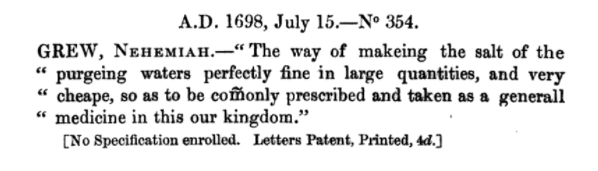
The mediation of the apothecary between spa and patient, Grew believed and this was a standard physician s view therefore created an intractable problem of credit. Grew realized that he could address that problem experimentally. By converting a social issue into a chymical one, he could also convert it into an opportunity to make a fortune.


...

The problem of adulteration was therefore inextricably bound up with contemporary medical institutions and identities. The only case in which a physician could trust to a medicine, it was said, was when he either pre- pared it himself or supervised its preparation in person.
The pugnacious physician Coxe added that London s apothecaries were so un- reliable that neither Physicians or the Diseased have reason to repose that trust in them which they challenge as their due.

When a vessel arrived at the port of Marseille laden with medicaments, its cargo could be expected to multiply threefold in weight by the time it left the city. London was no better. The hub of a pharmaceutical trade extending across the Atlantic and beyond, London furnished huge temptations to dilute, reconstitute, or downright fabricate.

As a patient or as a physician, how did you know what a medicine contained, or that it worked? How did you know that you knew? These doubts mattered for more than therapeutic reasons. Chymical physicians demanded that their new remedies be adopted, and to bolster their case they challenged Galenists to put them to the test empirically. Grew s own salt was publicly associated with this empirical challenge.

-- Piracy.
timelets: (Default)
https://assets.documentcloud.org/documents/4330118/Jacobs-Letter-Uber.pdf

Henley and Clark implemented this program of ephemeral and encrypted communications for the express purpose of destroying evidence of illegal or unethical practices to avoid discovery in actual or potential litigation. The Wickr application uses robust encryption which prevents the information from being viewed by anyone except the intended recipient, but more importantly, programs messages to self-destruct in a matter of seconds to no longer than six days. Consequently, Uber employees cannot be compelled to produce records of their chat conversations because no record is retained.
...
By storing this data on non-attributable devices, Uber believed it would avoid detection and never be subject to legal discovery. This is because a standard preservation of evidence order typically focused on Uber work laptops, Uber networks, and Uber mobile devices. Non- attributable devices were deemed as not reasonably subsumed by any such preservation order and the team could, and did, "legally" (not so) dispose of any evidence or documentation held on these devices in the intervening period before knowledge of the devices' existence could be uncovered.
...

Clark said that Uber needed to "shroud these work products in attorney-client privilege." Accordingly, Clark instructed Jacobs himself and others to address all emails on sensitive intelligence collection to him and ensure the emails were marked as "ATTORNEY-CLIENT PRIVILEGED AND CONFIDENTIAL," to mark any work product as "DRAFT" regardless of its actual status, and, on every communication, to specifically ask a question or request legal advice on some issue-even if no legal advice was needed or warranted. Likewise, he advised that Jacobs and others that they should communicate almost exclusively via phone, video teleconference ("Zoom"), or via the Wickr app, in that order of preference based on the record and audit trail each communications medium creates. Clark explained that the intent was to prevent disclosure of such communications if Jacobs was ever put on legal hold or his communications were ever subject to a preservation of evidence order.

Profile

timelets: (Default)
timelets

February 2026

S M T W T F S
123 4 567
891011121314
15161718192021
22232425262728

Syndicate

RSS Atom

Most Popular Tags

Style Credit

Expand Cut Tags

No cut tags
Page generated Feb. 6th, 2026 09:00 am
Powered by Dreamwidth Studios